
 Back to overview
Needlestick injury: what to do? Official roadmap & prevention tipsNews
Kimberlie Hanna

Needlestick injuries remain one of the most important occupational risks in healthcare. Any contact with blood or potentially contaminated material poses a risk of transmission of hepatitis B, hepatitis C or HIV. According to the Supreme Health Council (HGR 8429), such incidents often remain underreported and prevention measures are not always consistently applied. The cause? mainly due to time pressure, interruptions and insufficient knowledge of the proper steps.
To support healthcare professionals, in this blog we compile a handy roadmap based on KU Leuven guidelines, the Dutch Guideline Database and the HGR recommendations. In addition, we look at how prevention works in practice and what simple measures greatly reduce the risk of needlestick injuries.

What is a needlestick injury?
A needlestick injury includes any unintended exposure to blood or potentially contaminated material through a sharp object or through contact with mucous membranes or damaged skin.
This includes:
- a puncture by a used needle,
- A cut by contaminated material,
- A biting incident involving blood contact,
- splashes in eyes, mouth or on damaged skin.
The risks depend on:
- the depth of the injury,
- the amount of blood,
- the type of material,
- The infection status of the source patient.
The HGR emphasizes that any exposure must be followed according to the full protocol.
The roadmap for needlestick injuries
Step 1: Immediate initial concerns
In case of puncture or cut wound:
- Clean the wound immediately with soap and water.
- Don’t squeeze, don’t push, don’t try to bleed.
In case of splash in eyes or mouth:
- Eyes: rinse with water or physiological serum.
- Mouth: rinse with water (do not swallow).
When in contact with damaged skin:
- Wash thoroughly with soap and water.
Step 2: Reporting immediately
The incident should be reported immediately to:
- the supervisor or person in charge,
- the occupational health service,
- the internal prevention service.
Prompt reporting is essential because certain treatments (such as HIV-PEP) are time-critical.
Step 3: Recording the incident
Minimum registration includes:
- time, location and circumstances,
- Which instrument was involved,
- nature of the injury,
- source patient data (if known),
- vaccination status (HBV),
- any personal protective equipment.
Step 4: Blood Drawings
- For the victim: baseline serology: HBV, HCV and HIV.
- For the source patient (if possible): HBV, HCV and HIV serology.
If the source is unknown → risk assessment according to HGR recommendations.
Step 5: Risk analysis by occupational medicine
Rating based on:
- type of injury,
- amount of blood,
- resource status,
- vaccination status of victim.
Occupational medicine determines the need for additional follow-up.
Step 6: Post-Exposure Prophylaxis (PEP) if needed
- HIV-PEP: start if risk > low, preferably within 2 hours.
- HBV prophylaxis: dependent on vaccination status (KU Leuven + HGR).
- HCV: no prophylaxis, but strict follow-up.
Step 7: Follow-up
- repeated blood draws (usually at 6 weeks, 3 months, 6 months),
- observation for symptoms,
- psychological support if desired.
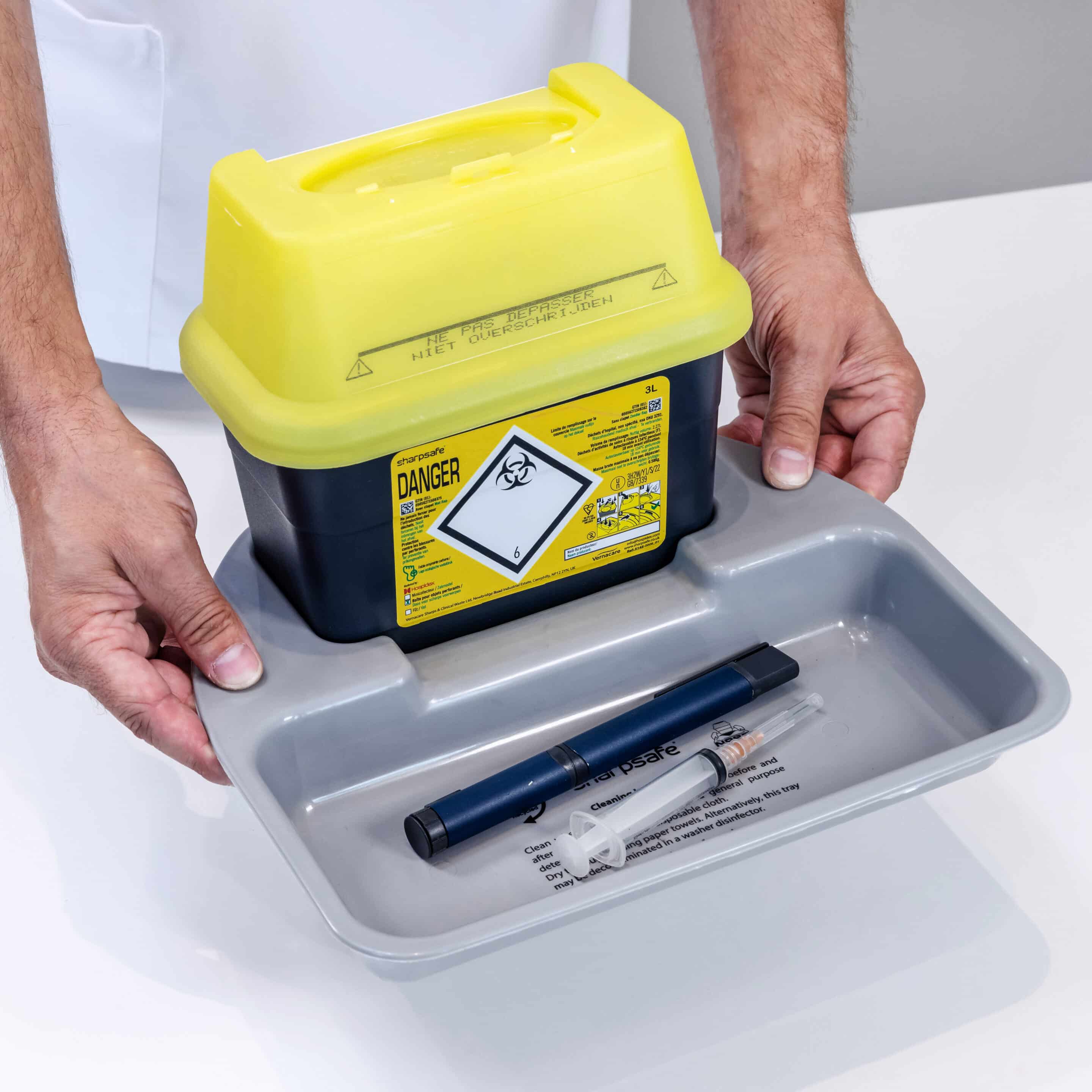
Why needlestick injuries happen: insights from the HGR guideline
The High Health Council (HGR) identifies the most common causes:
- Inadequately secure waste streams
Too full or poorly closing needle containers lead to errors. - Improper placement of containers
Containers placed too low, too high or too far away increase risks. - Improvisation due to time pressure
A major risk factor, especially in acute settings. - Recapping (prohibited by all guidelines)
HGR and Guidelines Database are unanimous: never recap. - Insufficient training of students/interims
KU Leuven stresses that basic instruction is crucial.
Prevention according to the Supreme Health Council
Prevention begins with an environment in which healthcare providers can intuitively work safely. The High Health Council emphasizes that the key is materials and routines that leave no doubt about what is right. A
In addition, the guidelines show that many incidents occur when people have to adjust to unclear or inconsistent procedures. A brief introduction for new employees, a team that works the same way, and clear agreements on waste management make all the difference. Prevention is not a complicated project: it is the sum of small, consistent habits that make a safe workday a matter of course.
Conclusion
A needlestick injury can happen to anyone, but how a team handles it determines the outcome. When healthcare professionals rely on a clear step-by-step plan and an environment that supports safety, an incident remains manageable and manageable. Ultimately, it’s about caring for each other: a culture where reporting is natural, follow-up happens quickly and prevention is part of the daily routine. This allows employees to work with assurance, knowing that their well-being is just as important as that of the patients.
Have a question about this article? Contact.

Kimberlie Hanna
MARKETING MANAGER
Please fill out the form to the right if you have questions about any of our news items. You can also ask questions about our participation in certain fairs or conferences here.